

Check Any UK Vehicle Instantly

10% OFF
User Protection 80+ Data Points Trusted data sources
Secure Encrypted Secure & Private Your Data is safe
Instant Results Instant Results Reports in seconds

Check Your Car’s Engine Number

Run an engine number check to confirm a vehicle’s recorded engine details before buying, selling, insuring or ordering parts. Use the registration number or VIN to review engine size, engine capacity, fuel type, vehicle specs and related records.

What is an Engine Number Check?

An engine number check will help you confirm whether the engine of a car is legitimate, matches its records, and is in compliance with the law. Each car has its own engine number, similar to a fingerprint, and an engine check will help see whether the engine has been replaced, stolen, or modified.

Before purchasing a used car, it is important to check the engine number of the vehicle to help reveal any concealed issues, falsified identities, or substituted engines that may lead to future legal complications. A vehicle engine number check online keeps you safe before and after buying.

Why Do You Need an Engine Number Check?

An engine number check protects you from costly risks and ensures you’re buying a legal, safe vehicle. Here’s why every car buyer should check before purchase.

Confirm Vehicle Authenticity

Check whether the engine details match the vehicle records, VIN and V5C logbook. Any mismatch should be reviewed before purchase.

Spot Engine Changes

A different engine number or engine code may suggest a replacement engine, recording issue or undeclared modification.

Check Parts Compatibility

Use an engine code checker or engine code by reg search to help confirm the correct engine type before ordering parts.

Support Insurance Accuracy

Insurance details may depend on the correct engine size, fuel type and vehicle specification. Checking the record helps avoid wrong policy details.

Review Used Car Risk

Engine record issues can be linked to poor repairs, missing paperwork or vehicle identity concerns.

Make a Better Buying Decision

A clear report helps you compare the engine details with the seller’s advert and ask better questions before paying.

Where Is the Engine Number Usually Located?

If you are asking what is my engine number or need to find my engine code, start with the vehicle documents and the engine itself.

You can usually check these places:

V5C Logbook

The V5C may show engine-related details. Use it to compare against the report, but remember it is not proof of legal ownership.

Engine Block

The engine number may be stamped directly on the engine block, although the exact location depends on the make and model.

Service or Repair Records

Invoices, service history and repair documents may include engine details, especially after major repair work.

Owner’s Manual or Manufacturer Data

Some vehicles include engine code or engine type information in the manual or manufacturer records.

How to Check Engine Number by Reg or VIN?

Running an engine number check is simple and fast. Just follow these steps:

Fact 1

Step 1: Enter the Reg or VIN Number

Enter the vehicle registration into the form on this page or run a VIN check.

Fact 2

Step 2: Click “Run Car Check Now”

Click on the “Run Car Check Now” button to initiate the search and view some vehicle details like the specs, colour, etc.

Fact 3

Step 3: View Engine Number Check Report

You will get a complete car check report with details of the engine number and specifications, and other records like MOT and tax status, outstanding finance, insurance write-off status and category, MOT history, and more.
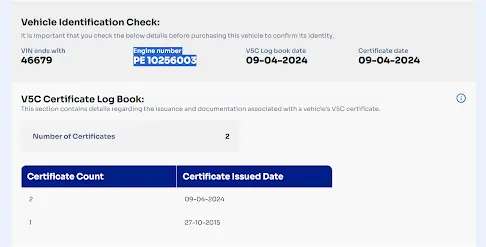

What is Included in Our Engine Number Check Report?

Our engine number check reveals the correct engine number, and everything you need to confirm a car’s true identity, ensuring it matches DVLA records and is safe to buy. It helps identify:

Engine Number Check

Vehicle History to Review Alongside Engine Details

The engine number check also provides details about important and hidden records that aren’t always visible or need to be verified. It includes the following:

Vehicle Specifications

Confirms the original details such as year, make, engine size, model, vehicle weight, and fuel type. Sellers sometimes misrepresent cars with swapped engines or false claims. This record makes sure the car matches its official factory specifications.

Outstanding Finance

This shows if the vehicle has unpaid loans or finance agreements still attached. If so, the lender could legally repossess it, leaving you out of pocket. Checking this record ensures the car is truly debt-free before purchase.

Stolen Vehicle Records

Confirms whether the car or its engine has ever been reported stolen in the UK. Buying a stolen vehicle means the police can seize it without compensation. This record safeguards your money and peace of mind.

Insurance Write-Off Records

Reveals if the vehicle has been declared a total loss due to severe accident damage, flooding, or fire. Even if repaired, such cars may have reduced safety and value. This record helps you avoid unsafe investments.

MOT History

Provides a detailed timeline of every MOT test the car has undergone, including advisories, passes, and failures. By checking this, buyers can spot repeated engine-related issues and determine how well the car has been maintained over time.

Logbook History

Verifies the V5C logbook details, ensuring that the engine number matches official DVLA records. A mismatch can indicate tampering or fraud. This record ensures ownership and documentation are consistent and legally sound.

High-Risk Records

Check whether the vehicle is associated with serious risks such as being imported, exported, scrapped, or involved in organised crime. These vehicles can be seized, refused registration, or cost a fortune in legal troubles.

Ownership Records

Shows the number of previous owners and any gaps in ownership. This is vital for tracing the car’s history, identifying patterns of frequent sales, and spotting possible reasons for quick resales.

Why Choose SmartCarCheck for an Engine Number Check?

When buying a used car, engine details can affect value, insurance, repairs and buyer confidence. SmartCarCheck helps you review engine records, vehicle specs and related history before spending your money.

Trusted & Updated Data

We source vehicle data from trusted and regularly updated records, including DVLA-linked, insurance, finance, auction, and vehicle data sources.

Comprehensive Database

Our database covers over 42 million licensed vehicles in the UK, checking against over 80 records to reveal hidden problems before you buy.

Free Vehicle Specifications

Access essential vehicle details such as make, model, engine size, fuel type, colour and registration information to confirm the car matches the seller’s description.

Downloadable PDF Reports

Receive your report in a clean digital PDF format that is easy to download, save, print and share when checking details with the seller or garage.

Free MOT and Tax Status Check

Instantly check MOT and tax status to help confirm whether the car appears road legal and ready to use.

Live Chat Support 24/7

Our support team is available around the clock to answer questions and guide you through the vehicle check process.

Helping Buyers Check Before They Pay

Anshid Valliayakkattil

Anshid Valliayakkattil

Mar 20, 2024 • UK
★★★★★

Yesterday, I went to their website and downloaded the app to confirm my REG. After that, Ben called me. He provided outstanding customer service! Prompt reply along with an extensive report. In terms of reporting, he is undoubtedly a pro. He carefully addressed inquiries and provided clarifications regarding the report. 'THE VERY BEST' encounter to be had thus far! Look no farther if you're searching for excellent service!

Mark

Mark

Nov 16, 2024 • UK
★★★★★

Great service, I got exactly what I needed the motorcycle reg plate and more useful information buy the premium report it is worth it, this was the first time I used the motorcycle vin check service and went through on the online chat which was very useful and reassured me I would get the information I needed to a bit of time but worth it. Richard on the line chat guy was very professional and helpful a big thanks to you & your company. Happy customer, Regards Mark

Aaron Slack

Aaron Slack

Apr 04, 2024 • UK
★★★★★

When I was selling a vehicle I had multiple people ask for documentation to show we had a clean title and for the window sticker, which unfortunately we no longer had. Smart Car Check helped us get both so we can show potential buyers. Recommended.

Joekwak Kwakwa

Joekwak Kwakwa

Mar 13, 2024 • UK
★★★★★

Wow! I just had the most impressive customer service experience. From the moment I reached out, the team was responsive, knowledgeable, and genuinely helpful. They went above and beyond to resolve my issue, keeping me informed every step of the way. The rep I worked with was amazing.

Explore Specific Car Checks

Get a Full Car History Check

Beyond checking the engine number and details, our full car check helps verify outstanding finance, write-offs, theft, mileage, and more. Protect yourself fully by getting the complete vehicle history report.

FAQ about Engine Number Check

You can find engine details in the owner’s manual, on the logbook (V5C), insurance papers, or directly on the engine block. You can also use the car registration or VIN to run a vehicle engine number check online to confirm if these details are correct.

Yes, the 17-character VIN provides key vehicle specifications, including the engine type and specs. With an engine number check, you can confirm if the actual engine matches the VIN number and hasn’t been swapped or tampered with.

Yes, an MOT test verifies if the engine number is valid and corresponds with the registration documents. It helps check if the vehicle meets safety and environmental standards, ensuring its roadworthiness.

You will find the engine number stamped on the engine block, near the gearbox, or on a metal plate under the bonnet. The number may also be located on your V5C logbook, service records, or owner’s manual.

To determine the engine year of your car, find the engine serial number or data code on the engine block and visit the website of the car manufacturer to decode the number. The engine date code is added after the initial two numbers in the serial number. An example is when an engine is manufactured in 2013, you would see 3013622. The “13” indicates the year 2013.

The engine number is a unique serial number, like a fingerprint. It helps track the production and verify originality. The engine code contains both letters and numbers, and identifies the engine’s type, capacity, and performance. This is crucial when selecting parts or replacing your car’s engine.

Yes, engine codes help reveal details like engine size, power, and fuel type, helping buyers know whether the car suits their driving expectations, towing, or performance requirements.

To verify a car’s engine number and codes, check the V5C logbook and owner’s documents. You can physically check the engine block and the VIN sticker to ensure the numbers match. For a complete check,  run an engine number check online to reveal the engine details based on the VIN number.

Engine numbers and codes help confirm identity, specifications, legality, and performance details. They are also used to validate insurance and maintain warranty. Mismatched numbers can signal theft, fraud, or major repairs, issues that affect value, safety, and your ability to insure the car.

Yes. A mismatch suggests engine replacement, tampering, or fraud. It can also cause insurance issues, reduce resale value, and leave you with an unreliable or unsafe car.

Manufacturers use engine codes to recall which vehicles have potential engine issues or faults. The code helps them link to a particular production batch and send recall updates to the owners of the affected vehicles. A full car check helps ensure you know whether your engine is part of a safety recall campaign.

If the engine number, engine code, VIN or vehicle records do not match, ask the seller for proof such as repair invoices, replacement records or garage documents. Compare the V5C, service history, MOT records and report details before paying.

If the mismatch cannot be explained clearly, consider a professional inspection or walk away.