

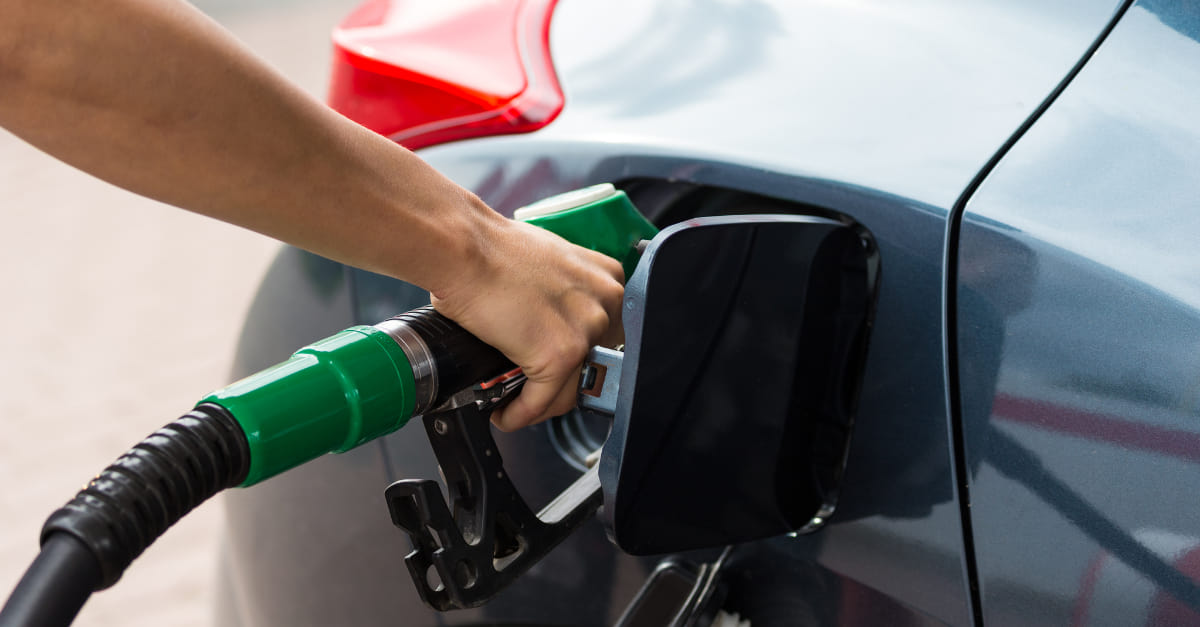
Have you ever wondered just how much fuel (petrol or diesel) your car can hold? Being aware of your tank size enables you to plan out long journeys, get to know your driving range and calculate how much money you will use in fueling up.
The average car tank in the UK normally contains between 38 and 76 litres (10 to 20 gallons). There are those cars with a small tank that require constant filling up and then there are those with large tanks that allow you to drive days before you visit a petrol station.
It is really easy to find your car fuel capacity once you know where to look. This guide will provide you with easy methods of knowing how big your fuel tank is, why it is important, and what these numbers can actually mean to your everyday driving experience and your wallet.
How Many Litres of Fuel Does My Car Hold?
Your car fuel tank capacity is often listed in liters (L), and occasionally in gallons (1 UK gallon = 4.546L). Here are some methods to know your car’s fuel capacity:
- Get a car spec check online
- Check the owner’s manual
- Visit the manufacturer’s website
- Contact your dealership
Get a Full Car Specification Check
If you’re not with the car or don’t have access to the owner’s manual, using an instant car spec checker online provides a convenient way to know your vehicle’s fuel tank capacity.
How to Check Your Tank Capacity with a Car Spec Checker
To check right away, simply enter the registration number into Smart Car Check car spec checker and click “Search” to access the vehicle specifications, including the details about the fuel capacity.
You need to take a good look at the “Weight and Dimensions” section to see how many liters the car can hold.
Check the Owner’s Manual
The owner’s manual is one very important document that you can use to get information about a vehicle’s specifications, features and more. By checking the “Specifications” or “Capacities” sections of the manual, you should be able to find your car fuel tank capacity, which is usually in liters.
Visit the Manufacturer’s Website
You can check out your car’s manufacturer’s website for details about the vehicle specifications, including the fuel tank capacity. You may need to provide the vehicle identification number (VIN).
Contact Your Dealership
It’s also possible to get some vehicle information from a local dealership. They will require your VIN to be able to provide the exact vehicle details including the car tank’s fuel capacity.
READ ALSO: How to Check Car Details By Number Plate In the UK?
How to Calculate Your Fuel Tank Size by Yourself
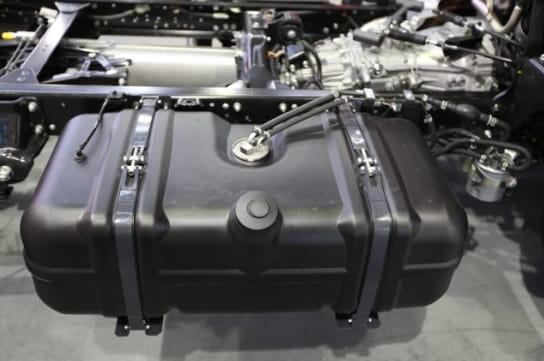
You can also measure the length, width, and height of the fuel tank, but this will take time to remove and fix the tank back on the car. You will also need a meter rule and a calculator. Start by writing down the measured values and using the following formula:
Step 1: Estimate the Volume of the Fuel Tank
- Get the volume of the tank by multiplying the size of the length, width, and height
- Volume = Length x Width x Height (If your tank measures 50 cm by 30 cm by 40 cm, the volume would be:
- Volume = 50 x 30 x 40 = 60,000 cubic centimeters
Step 2: Convert to Liters or Gallons
- To convert cubic centimeters to liters, divide the volume by 1,000:
- Liters = Cubic Centimeters ÷ 1,000
- Using the example above, the tank would have a capacity of:
- Liters = 60,000 ÷ 1,000 = 60 liters
If you prefer to use gallons, you can convert liters to gallons by dividing the number of liters by 4.546:
- Gallons = Liters ÷ 4.546
- Using the example above, the tank would have a capacity of:
- Gallons = 60 ÷ 4.546 = 13.20 gallons.
Other than measuring the fuel tank size, you can empty the fuel tank then fill up when the fuel light comes on (also note the number of liters or gallons used to fill up). It’s as simple as that.
The Advantages of Being Aware of Your Car Fuel Capacity
Some of the benefits to be enjoyed when you are aware of your car’s fuel tank capacity include:
Plan Long Journeys Better
Being aware of your tank size will enable you to know your exact range of driving before you need to fill your fuel tank. This prevents getting stuck in motorways or roads deep in the country and with no petrol stations near.
Save Money on Fuel
Knowing your range will enable you to refill at lower-priced petrol stations rather than motorway services, which are costly. You will know whether you will get enough fuel to get to cost-efficient stations along the way.
Avoid Emergency Situations
The problem of running out of petrol is stressful, time wasting, and expensive in terms of recovery services. Being aware of your tank capacity would make you refuel at the appropriate time and prevent embarrassing breakdowns.
Calculate Running Costs Accurately
When you know your tank size and fuel consumption, you can work out exactly how much driving costs weekly or monthly. This helps with budgeting and deciding if your car suits you.
What Are the Fuel Types Available in the UK
UK drivers can choose from several fuel options for their vehicles. Each type has different costs, performance levels, and environmental impacts worth considering.
Petrol
Petrol is the most common fuel in the UK. It burns cleanly, suits most cars, and you’ll find it at every petrol station across the country.
Unleaded Petrol (E5 and E10)
E10 petrol contains 10% ethanol and replaced E5 as the standard in 2021. Most cars built after 2011 run fine on it.
Super Unleaded
Super unleaded has higher octane ratings than standard petrol. Performance cars run better on it, but it costs more at the pump than regular fuel.
Diesel
Diesel engines are also popular, especially for larger vehicles and long-distance driving. Diesel fuel provides better fuel economy but costs slightly more than petrol.
Standard Diesel
Regular diesel works in all diesel engines and offers good mileage. It’s widely available but produces more emissions than newer fuel types like premium diesel.
Premium Diesel
Premium diesel contains additives that clean your engine and improve performance. Manufacturers claim it boosts fuel economy, though the difference is often small for most drivers.
Electric
Electric vehicles run on battery power with zero exhaust emissions. Charging costs less than petrol or diesel, but you need access to charging points at home or public stations.
Hybrid
Hybrid cars combine petrol or diesel engines with electric motors. They switch between fuel types automatically, saving money in city driving where electric mode works best.
Plug-in Hybrid
Plug-in hybrids have larger batteries that you charge from the mains. They can drive 30-50 miles on electricity alone before the petrol engine kicks in.
Self-Charging Hybrid
Self-charging hybrids generate electricity through braking and driving. You never plug them in, but the electric range is much shorter than plug-in versions offer.
Liquefied Petroleum Gas (LPG)
LPG costs less than petrol and produces fewer emissions. However, fewer stations sell it now, and converting your car to run on LPG can be expensive.
Hydrogen
Hydrogen fuel cell cars produce only water as waste. The technology is clean, and refuelling takes minutes, but hydrogen stations are extremely rare in the UK currently.
What is the Best Fuel Type to Use?
The best fuel depends on your driving habits and budget. If you drive short trips around town, petrol or a hybrid makes sense. For long motorway journeys, diesel offers better fuel economy and lower running costs over time.
Think about charging options, too. Electric cars work great if you can charge at home overnight. Otherwise, petrol remains the easiest choice since stations are everywhere and refuelling takes just minutes.
How to Buy a Used Car with Better Fuel Efficiency
Before buying a used car, ensure to get an MPG check to know the official MPG ratings and easily compare fuel consumption between several models. Smaller engines (1.0 to 1.4 litres) consume less fuel, while Hybrid and EVs offer excellent efficiency.
You should also run a full vehicle history check and request the service history from the seller to verify the accurate mileage and understand the engine’s maintenance over the years.
FAQ About Car Fuel Capacity
How big is my fuel tank?
To find out how big your fuel tank is, you can easily check the owner’s manual provided by the manufacturer, check the “Weights and Dimensions” section of the car history report, empty your tank and fill it up, or measure the tank yourself using mathematical formulas.
How big is my petrol tank?
The capacity of the petrol tank may also differ according to the model and the make of your vehicle. In order to get the specific capacity of your petrol tank, you can consult your vehicle owner’s manual or have your entire car specifications checked through our car check tool.
What is the average car fuel tank size in the UK?
The average size of the fuel tank normally varies between 35 to 75 liters. The average size of small cars (e.g. Ford Fiesta) is 35-45 liters, family-sized cars is 50-55 liters, and big SUVs may have 90 liters or higher tank volume.




