

Fluids
There are several car fluids that enable your car to run smoothly and keep you safe on the road. Checking them often helps prevent damage, avoid breakdowns, and keep the engine and other parts working properly.
These include:
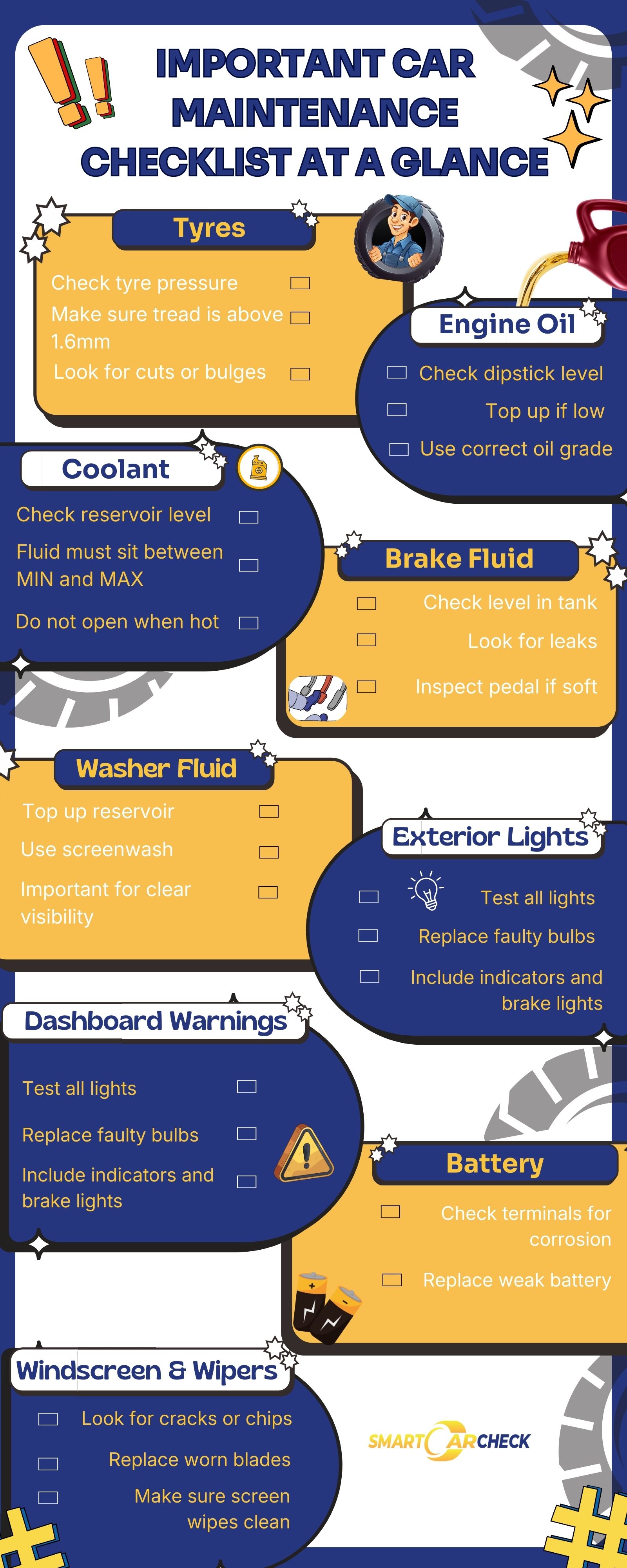
Engine Oil and Filter
Motor oil keeps your engine cool and in good operation. As the oil becomes old, it becomes dirty and can no longer protect the engine. This may cause damage and costly repairs. One simple solution to ensure that you can solve problems at an early stage is to check your oil level.
Also, when changing the oil, the best practice is to change the oil filter. The oil filter captures the dirt such that it does not enter the engine. Once the oil filter becomes full, it will not be able to filter the dirt. Replacing your engine oil and filter keeps your engine clean.
Coolant Levels
Coolant, as the name implies, insulates the engine against excessive heat or excessive cold (which can occur during cold weather). A low level of coolant may cause overheating, thus resulting in an engine breakdown, which is costly to fix.
The coolant should be of the correct ratio of antifreeze and water. In case of any imbalance in the percentage, the engine would fail to sustain the correct temperature. It would be good to check the markings on the coolant tank.
Brake Fluid
Brake fluid assists your brakes to work comfortably and safely. Once the fluid becomes old, it becomes moist and ineffective. This may render your braking less powerful and expose you to danger on the road. Your car is safe when you check the amount of brake fluid.
When the level decreases, it may indicate that there is a leak in the brake system. A leak should be repaired immediately, as it may lead to a loss of brakes. Regular service times should also be used to change the fluid. Always consult the car manual or a mechanic.
Transmission Fluid
The gears move smoothly with the help of transmission fluid. When the fluid is low or contaminated, your vehicle will either jerk or slip when changing gears. This may destroy the transmission, which is quite expensive to fix. Making sure that the fluid is fine is a way of ensuring that your car is running smoothly.
There are various regulations regarding the time of changing the fluid of a different car. Some of them require it after every few years, and others require it less frequently. You should stick to your handbook schedule. Maintaining the fluid clean keeps the entire transmission system safe.
Transfer Case Fluid
The transfer case of 4×4 and all-wheel-drive cars requires special fluid. This fluid assists in transmitting power to the front and back wheels. In case the fluid is small or old, the system might not perform as it is supposed to. This may influence the control of your car, particularly during unfavourable weather.
Problems with transfer cases may lead to odd sounds and poor performance. The fluid should be checked to avoid wear and tear. It should be replaced by a mechanic at the right time intervals. This makes the system robust and fluid.
Tyres
One of the most significant safety components of your car is tyres. Good tyres enable you to have better grip on the road, brake quickly, and drive safely in rain or snow. Tyres with low tread or damaged tyres are dangerous to drive. Accidents can be avoided by checking them regularly.
The tyre pressure should also be checked. High or low pressure influences fuel consumption, tyre wear and braking capability. The correct pressure is indicated on a sticker on the inside of the door of the car or in the manual. Safe tyres ensure that you are in control all the time.
Spark Plug (Petrol Engines Only)
Spark plugs assist in igniting the engine and maintaining a smooth-running engine. The engine might shake or become powerless when it becomes old or dirty. You may find that the car has slow acceleration or difficulty starting. Checking them contributes to keeping the engine strong.
New spark plugs burn your engine more efficiently. This can enhance fuel consumption and minimise emissions. The plugs of most cars require replacement every few years. Maintaining them is a way of ensuring your engine runs clean and smoothly.
Brakes
The most important safety feature of your car is your brakes. When your brakes are soft, emit odd sounds, or take more time to come to a halt, there might be something wrong with them. Frequent inspections enable you to spot issues in time. Good brakes provide one with the confidence to safely stop.
Brake pads wear out over time and need replacement. The brake discs may be damaged by worn pads and are expensive to repair. The pad thickness can be checked by a mechanic to ensure that everything is fine. Maintaining your brakes is a way of safeguarding you and other users on the road.
Battery
The battery provides your car with the power to start. When the battery is low, your car can have difficulty starting, or the lights can be faint. Weak batteries are even worse in cold weather. To prevent being caught up, test your battery.
Car batteries have a lifespan of three to five years. In case yours is old, then it could require a replacement in the near future. Issues may also arise during corrosion of the battery terminals. Maintaining them can be done by cleaning to ensure that the connection is strong and reliable.
READ ALSO: Car Engine Types: What You Need to Know in the UK
Visibility
Visibility provides good visibility, enabling you to see the road and avoid accidents. Most drivers do not bother to test their lights and wipers until there is a problem. Maintaining them in good condition will make you drive safely in every weather. Checking the following parts goes a long way.
Lights
Your lights make you visible and allow other drivers to see you. When a bulb fails, it becomes unsafe and against the law to drive. It is a good idea to check all the lights so as to avoid fines and danger. This encompasses headlights, brake lights, indicators, and fog lights.
Light strength can also be reduced by dirty or foggy lenses. Washing them makes your lights shine better. In case your Headlights are hazy, then a cleaning kit would be useful. Working lights are essential in driving, and they should be clear.
Windscreen Wash
Windscreen wash is used to keep the glass clean when driving. A dirty windscreen may obstruct your vision and be hazardous. Having the wash bottle full will enable you to see well in rain, dust, and dirt. One has to check in a moment.
Wash with proper screen wash, not plain water. Screen wash assists in washing out bugs, oils, and dirt. It prevents the freezing of the water in winter as well. Clear windows help you to keep alert to all that surrounds you.
Wiper Blades
Wiper blades clean the windscreen of rain and dirt. They can be worn out in case they leave streaks or cause noise. The use of old blades may render driving in the rain unsafe. It is good to replace them so that your vision is clear.
The average lifespan of wiper blades is one year. They may crack or lose shape in the sun, cold, and dirt. New blades come in handy during wet seasons because you can always see the road.
Cleaning of Interiors and Exteriors
Washing your car may be insignificant, but it counts. Paint can be damaged by dirt and salt, which will result in rust. It is easier to check a clean car, and you notice issues earlier. Cleaning the exterior assists in shielding the bodywork.
The inside matters too. Clutter and dust may cover air vents and make driving unpleasant. Clear windows enhance visibility. A clean automobile is also easier to drive, and it keeps you awake.
Other Car Maintenance Checklist
Here are other important checks to help keep your car safe and running well. This list covers parts you might overlook but still matter for comfort, performance, and reliability.
Shocks and Struts
Shocks and struts ensure that your car is stable on the road. When they wear out, the car bounces excessively, or it becomes unstable. This may render driving uncomfortable and unsafe. Riding them assists in maintaining a smooth ride.
Your braking range is also subject to bad shocks. Unbalanced tyre wear may be a result of worn struts. Their replacement, as required, safeguards the other car parts. It also assists in maintaining safe and stable driving.
Air Conditioning
The air conditioning makes the interior of your car cool and comfortable. In case of a stoppage, the air might feel weak or warm. Maintenance is a way of ensuring that the system is running smoothly. It also assists in clearing the mist on the windows.
The system may fail due to low gas or leaks. A specialist will be able to inspect the leaks and refill the gas when necessary. It is good to maintain the air conditioning in good condition so that you can drive all year round in comfort. It also enhances the air quality of the car.
Important Checks Before Buying a Used Car
Purchasing a secondhand vehicle can help to save money, but you should inspect it first.
Check the service history to determine how the car was maintained. Inspect the tyres, brakes, and engine to see whether they are worn. A test drive is a quick way of getting to know how the car performs.
You should also get a full car check to verify the V5C logbook, previous keepers, mileage, MOT history, insurance write-off, outstanding finance, scrapped records, and more. These checks help you spot hidden problems. A vehicle history check can reveal past damage, theft records, or finance issues, thus helping you avoid bad deals.
Conclusion on Car Maintenance Checklist
Taking care of your car does not have to be hard. With this car maintenance checklist and regular checks, you can keep your car safe, reliable, and ready for the road. This maintenance checklist is designed to help you stay on top of the most important tasks. Whether you’re checking fluids, tyres, brakes, or visibility, every small step helps your car last longer and run better.
By looking after your car all year round, you save money, avoid stress, and stay safe on the road. Good maintenance also helps your car pass its MOT and keeps it in great shape when it’s time to sell.




